Warnemünde to Berlin by train: how to do it safely on a port day
Last checked:
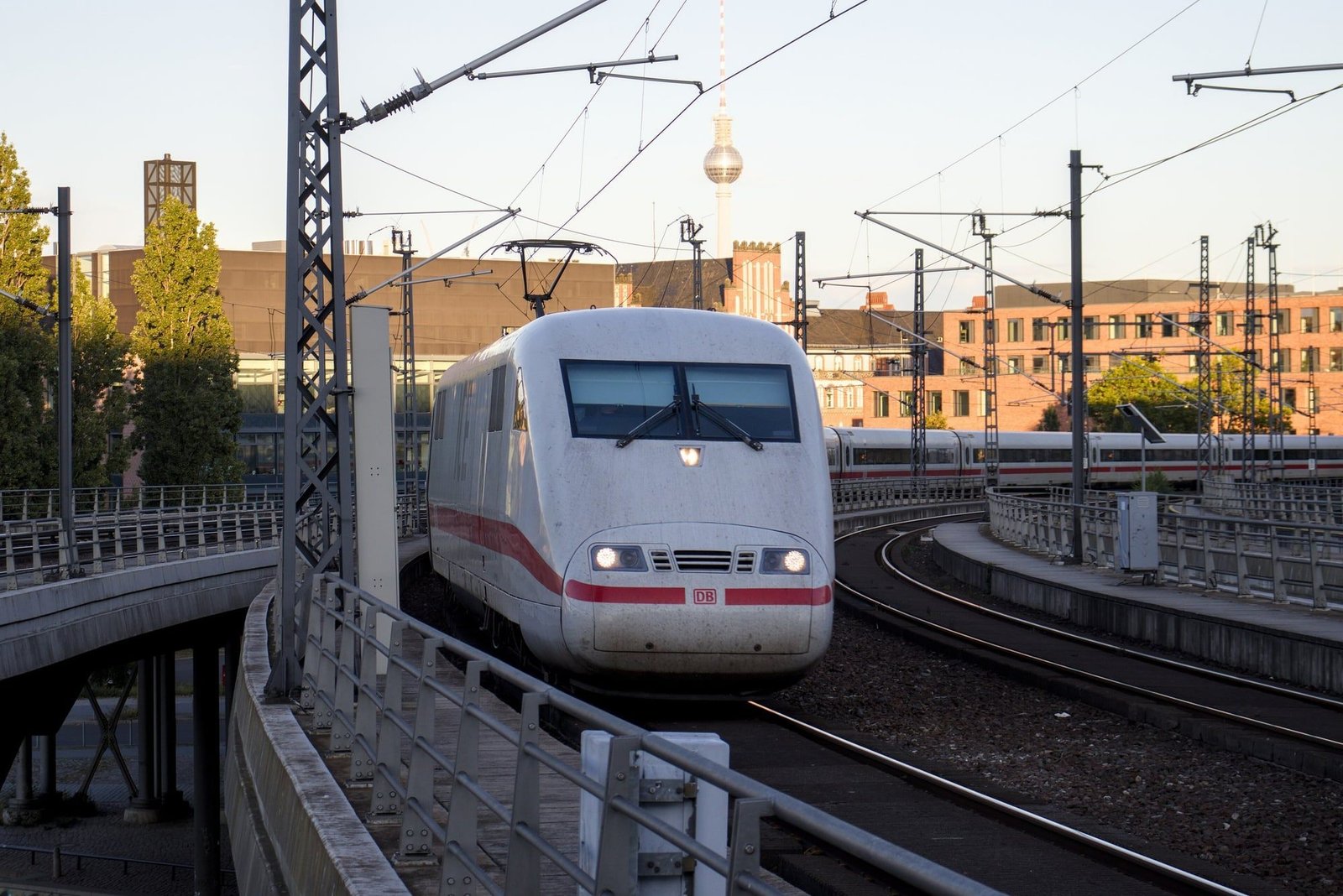
The train is the cheapest way to Berlin from your ship and gives you the most freedom once you’re there. It’s also the option with the least protection: if you miss the train back, the ship sails without you. Done carefully, it works.
The short version
- In the timetable running until 12 December 2026 there’s no direct train. The fastest way is the S-Bahn to Rostock Hauptbahnhof (about 20 minutes), then the RE5 regional train to Berlin Hauptbahnhof (about 2 hours 35 minutes): about 3 hours 10 minutes in all. The RE5 runs about every two hours.
- A new timetable starts on 13 December 2026. Direct Intercity trains have run in earlier years, so check bahn.de for your date.
- Plan your day backwards from all-aboard, and come back one train earlier than the last one that would work.
Step 1: Plan backwards from all-aboard
- Find your ship’s arrival time and all-aboard time (usually 30 minutes before departure; check your daily programme).
- On bahn.de or the DB Navigator app, search Berlin Hbf → Warnemünde for your date.
- Find the latest train that arrives in Warnemünde at least 90 minutes before all-aboard. Then plan to take the one before it. That earlier train is your real deadline; the later one is your backup.
- Now search Warnemünde → Berlin Hbf for the earliest train you can comfortably make after getting off the ship.
The gap between your arrival in Berlin and the departure of your planned train back is your time in the city.
Example (illustrative; check your date): ship 07:00–20:00, all-aboard 19:30. Off the ship and at the station by about 07:45, you reach Berlin Hauptbahnhof at about 11:00 at the earliest. To be back in Warnemünde by 18:00, the latest workable train leaves Berlin around 14:50. That’s at most about four hours in Berlin, and about two if you keep the train before as your deadline, as we recommend: with trains about every two hours, the earlier one is your safety margin.
Step 2: Choose the right ticket
- Saver fare (Sparpreis): cheapest, but valid only on the train you booked. If you miss it through your own lateness, you may have to buy a new ticket.
- Flexible fare (Flexpreis): costs more but lets you take any train on that route that day. On a ship day, that flexibility is worth paying for.
- A sensible mix: saver fare out, flexible fare back.
- Check whether your ticket includes a City-Ticket for Berlin’s local transport. If not, buy a Berlin AB day ticket from a machine or the BVG app.
Step 3: From ship to train
Warnemünde station is a few minutes’ walk from the passenger quay; follow the signs. Allow at least 30 minutes from the ship’s gangway to the platform on busy days. If your ship docked at the overseas port (Überseehafen) instead of the passenger quay, you’ll need the ship’s shuttle or a taxi to a station: allow much longer.
Step 4: Using your hours in Berlin
Berlin Hauptbahnhof is close to the government quarter: the Reichstag and Brandenburg Gate are a 15–20 minute walk. Stay within the centre (Mitte) and use the S-Bahn and U-Bahn; going far out eats time. Our Berlin in a day page has three routes that fit four to five hours, and Berlin Is Closed shows which sights are shut for renovation on your date.
Step 5: The way back
- Be on the platform 20 minutes early. Platform changes are announced on the boards and in the app.
- Keep the DB Navigator app open: it shows delays as they happen.
- Change at Rostock Hauptbahnhof for the S-Bahn and stay on to the last stop, “Warnemünde”; “Warnemünde Werft”, the stop before it, is the wrong one. The S-Bahn runs every 7.5 to 15 minutes. If something goes wrong in Rostock, a taxi from Rostock Hbf to the passenger quay takes about 20–25 minutes.
If something goes wrong
- Train cancelled or badly delayed: speak to DB staff immediately and take the next possible connection. If your train is expected to be significantly late, the train-specific restriction on saver tickets is normally lifted; staff can confirm.
- Phone the ship’s port agent (number in your daily programme) as soon as you know you might be late. They can’t hold the ship, but they can tell you where it goes next and what to do.
- If you miss the ship, you’ll need to get yourself, at your own cost, to the next port. Travel insurance may help; check your policy before the trip.
Is the train right for you?
The train suits confident, independent travellers on long port calls who are happy to plan carefully. If your call is under twelve hours, if you’re travelling with people who walk slowly, or if missing the ship would be a disaster, a door-to-door option will give you more Berlin and less worry. Compare every option.
Questions people ask
Is there a direct train from Warnemünde to Berlin?
Not in the timetable running until 12 December 2026: on the dates we checked, every connection changed, usually at Rostock Hauptbahnhof, and the fastest took about 3 hours 10 minutes. Direct Intercity trains have run in earlier timetables. A new timetable starts on 13 December 2026, so check your date on bahn.de.
Which ticket should I buy?
If your connection uses only regional trains (the S-Bahn and the RE5), the ticket isn't tied to one train. If it includes an Intercity, saver fares are cheap but valid only on the train you booked. On a ship day, flexibility matters more than price: buy a flexible fare at least for the return.
What if my train back is cancelled?
Go straight to Deutsche Bahn staff on the platform or at the travel centre, and phone the ship's port agent (the number is in your daily programme). The ship will not wait for independent travellers, so build in a large buffer from the start.